
Every business, small or large, likely runs on the Saas operations. Over the years, businesses have begun to integrate more SaaS services to reduce costs and mitigate risk. According to market growth reports in 2026, the SaaS Operations Management Software Market size is valued at USD 712.9 million.
However, the gap between integrating and effectively managing SaaS operations in any business remains large. Companies may have multiple software, but they are unable to make the most of them. Most companies suffer when there is operational chaos and security hazards.
Therefore, it is pivotal to understand Saas operations management in detail. The businesses tend to run more smoothly when there is a well-structured and reliable SaaS operations strategy.
This ultimate guide will cover everything you need to know about what it is, why it matters, and how to use it effectively to achieve the best results.
What is Saas Operations Management?
To understand Saas Operations Management better, let’s begin with the word Saas. Saas (Software as a Service) can be defined as software used by people over the Internet rather than installing it on computers. Typically, we pay a subscription fee to access it, like Microsoft 365, Slack, Gmail, etc.
So, Saas Operations Management manages all day-to-day operations of software to ensure more ad hoc, disciplined, repetitive, and optimised results for better operational value.
The Importance of SaaS Operations Management
The need to have automated SaaS operations has increased over time. One must be related to the advancement in technology. Well, it’s not the only key factor. Businesses now want automated, optimised, and well-planned workflows. It not only mitigates risks but also helps businesses to save hundreds of dollars by letting software do the work that was once done manually.
What is the SaaS operations strategy?
In simple terms, the SaaS operations strategy can be defined as the ‘roadmap’ or the ‘blueprint’. It basically serves as a guide in an organisation. It helps to manage, optimise, and streamline the routine SaaS business operations.
The better the strategy, the greater the results. A good strategy ensures streamlined workflows, automation practices, and performance metrics that help SaaS business operations boost efficiency and improve quality.
Here are some key components for an efficient Saas operations strategy;
- Customer onboarding: It is typically the first and most important component since it is the first user experience. Customer onboarding includes helping the customer with account setup, product tutorials, welcome emails, data migration, and user training to help the users navigate the software smoothly.
- Billing and subscriptions: It involves everything related to managing subscriptions, payment processes, refunds, billing, invoice generation, and renewals.
- User management ensures the security of the user accounts. Its common features include user registration, authentication, password management, and Multifactor authentication.
- Security protocols: Implementing effective measures for user data protection. The SaaS ops team implements effective measures for security monitoring, identity and access management, and regular updates and security checks.
- Analytics and reporting: Use of metrics to track results and ensure better outcomes. Some of the metrics that are used are customer churn rate, monthly recurring revenue, annual recurring revenue, active users, customer acquisition cost, and customer lifetime value.
- Customer support: this set of SaaS operations assists customers and helps them drive the desired outcomes. Support is provided through emails, chatbots, help desk tickets, phone calls, or community forums.
- Customer success: These operations also help customers drive the desired outcomes. The team works to drive more customers, increase product satisfaction, improve customer health and ensure revenue growth.
- Cost control: managing the budget by reviewing all the billings and subscriptions regularly.
- Infrastructure management: Keeping in check with servers, cloud and other resources to ensure smooth workflows. It involves server management, backups, disaster recovery, cloud resource allocation, and server management.
All these SaaS operational processes are the key essentials for delivering a better customer experience, enhancing business scalability, and ensuring customer satisfaction.
SaaS Operations Tools
Now that we have discussed the importance of Saas operations strategy, it is pivotal to understand the necessary set of tools needed to run the operations better. Well, there isn’t one tool that can scale up the process, but many.
There are tools for project management, analytics, billing, DevOps, automation, communication and collaboration, monitoring, and cloud infrastructure.
All of these tools work as agents to run the operations of your company more smoothly and efficiently.
Read our blog on the 20 best Saas operations tools to find the most cost-effective and efficient tool for your business.
SaaS workflow management
Saas workflow management is basically the process of automating, monitoring, designing, and optimising business workflows. It not only helps to reduce costs but also streamlines tasks to avoid repetition and improve collaboration.
Some of the essential features of workflow management include:
- Workflow automation
- Real-time tracking
- Analytics for monitoring tools
- Integration with various business applications
- Reminders and notifications
- Security compliance
These features help the SaaS operations team run automated workflows without many errors and delays.
Saas operations management Challenges
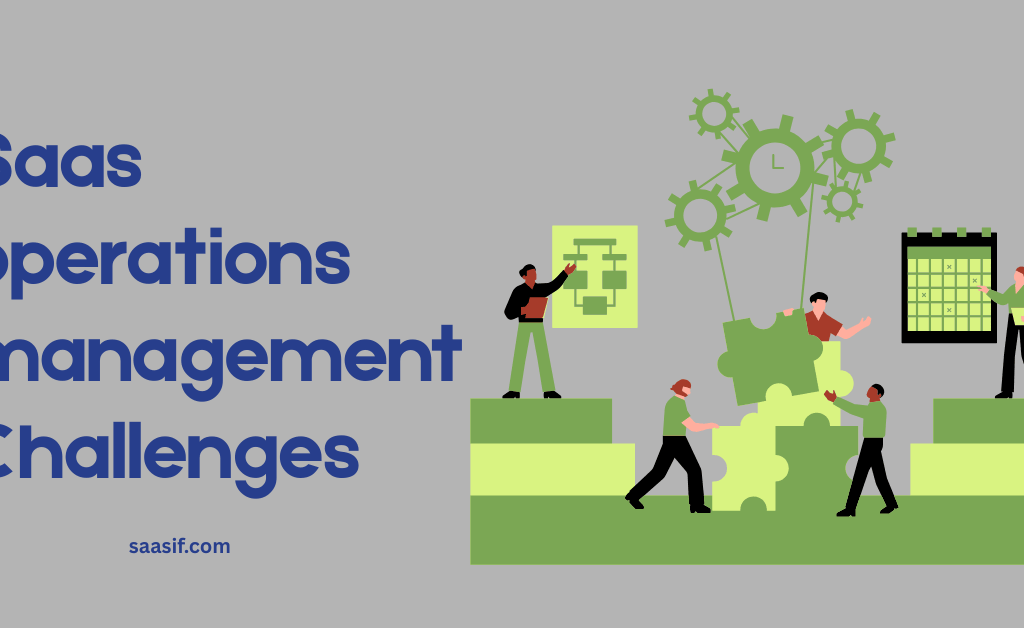
Nothing is all glitter all the time. When there is technology, there ought to be some challenges along the way, too. Some of the common challenges faced while managing SaaS operations are:
- Pacing up with the rapid growth in business
- Not being able to take timely preventive measures.
- Keeping up with increased customer expectations.
- Ensuring 100 per cent effective team collaboration.
- Running smooth billings
- Ensuring data security.
That’s indeed a lot to keep up with. But! Don’t panic! These challenges can be handled very well if the company integrates the best practices of operations management listed below.
SaaS ops management best practices
Results-driven SaaS management systems require a set of best practices that are aligned with the goals and objectives of the organisation.
These practices, along with the best SaaS operations tools and workflows, help the organisation to squeeze out most of its potential.
Some of the best practices of SaaS ops management are:
- Effective user management is pivotal. One should regularly communicate with the users to get effective feedback, avoiding security breaches, and improving overall user experience that follows SLAs.
- Boost team collaboration to improve operations and ensure smooth workflows. It will also help in faster problem-solving and producing better ideas.
- Take proactive measures for the company’s security.
- Use effective KPIs to drive better results from customer data.
- Optimise customer onboarding by providing user-friendly tutorials, guidelines, and resources.
- Establish standardised policies and workflows to ensure the best employee and user experience.
- Lastly, always put your money on the right tools that actually provide good outcomes.
Conclusion
To conclude, Saas ops are not just software, but they are the engines of your company that, along with a well-collaborated team, drive the company in the right direction. So, the companies that invest in reliable SaaS ops practices will tend to scale at a faster pace.
FAQs
How to scale a Saas startup?
To scale a Saas startup, one should streamline and automate their operations while increasing customer retention and building a strong infrastructure to generate maximum revenue.
What are some of the Saas operations tools?
Some of the top-ranked Saas operations tools are:
- Dropbox
- Josys
- Vendor
- Zluri
- Zendesk
- Salsforce
- Google workspace
- Notion
What are the advantages of having Saas operations management?
One of the biggest advantages of using Saas is that everything is managed online. No memory issues and no worry of storing a large amount of data. Thus, with Saas everything is streamlined with increased efficiency and lower costs. Moreover, risks have been mitigated with increased security and backups.
How would AI effect Saas?
AI has impacted every field one way or another. Saas operations are likely to become more automated and AI-driven than before. However, it is expected to take a positive and more optimised turn.
Is my data secure with Saas?
Well, security can’t be guaranteed wherever technology is involved. Cyberthreats, lost files, security breaches or accidental deletes can occur. However, the security and compliance standards provide 99% guarantee of securing customers’ data and avoiding any mishaps.
How to integrate Saas for small businesses?
Firstly, know your business needs and goals. Then, choose the right set of Saas tools needed to run your business. After that, create a proper infrastructure with automated workflows, prioritising security and monitoring your KPIs. Last but not least, build a well-collaborated team.